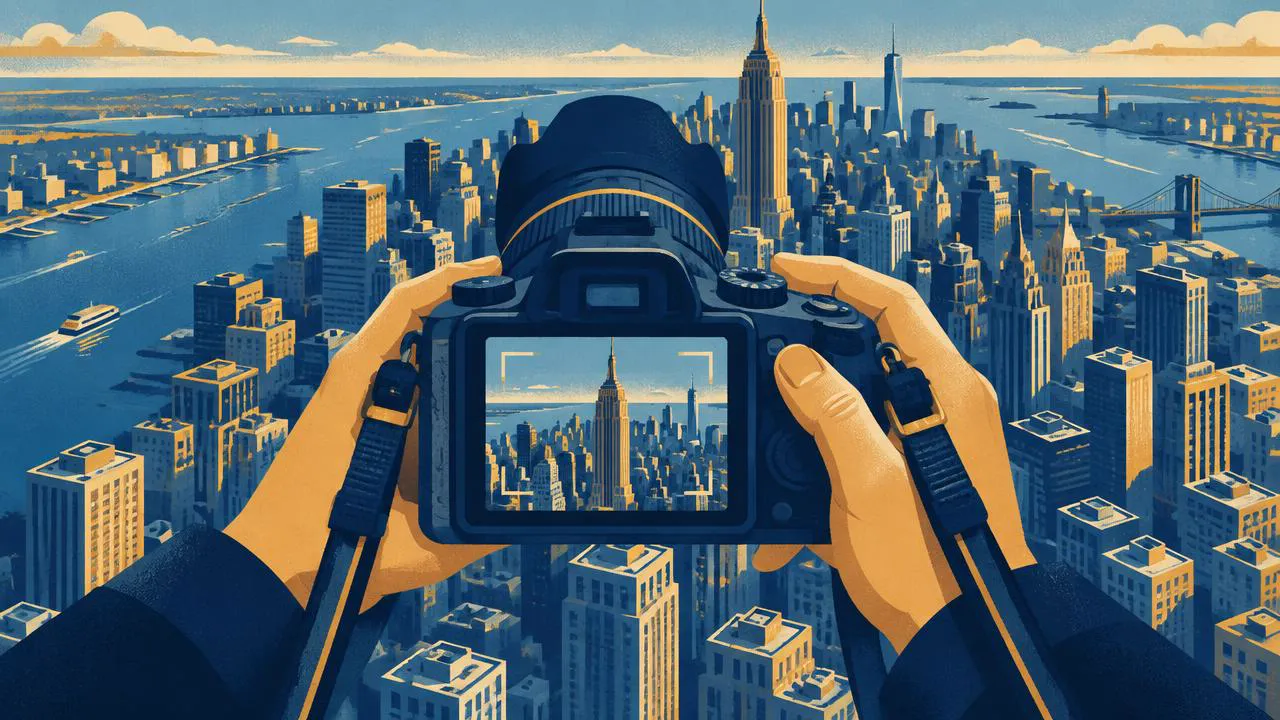
Freeze the vibration
Helicopters vibrate. Use a fast shutter — 1/1000 s or faster in daylight — and let the camera raise ISO if needed. Turn on image stabilization and burst mode. Don't brace the camera against the airframe; it transmits vibration.
Lens choice
A standard zoom around 24–70 mm (full-frame equivalent) covers almost everything, from wide skyline panoramas to tighter shots of the Statue of Liberty. Lens changes in flight are impractical, so pick one lens.
Shooting through windows
In a closed cabin, put the lens close to the glass (without touching it) and wear dark clothing to cut reflections. Skip polarizing filters: on acrylic windows they can create rainbow-like stress patterns.
Night settings
| Situation | Starting point |
|---|---|
| Daylight | 1/1000 s, f/5.6, auto ISO |
| Golden hour | 1/800 s, f/4, auto ISO |
| Night | 1/250 s or faster, widest aperture, high ISO |
Safety first
On doors-off flights all equipment must be tethered and bags stowed — follow the crew's rules exactly. Phones need a strap. Nothing should ever be held loosely near an open door. Exact inclusions, fees and rules differ by operator and option — always confirm them on the tour's Viator page before you book.
Frequently asked questions
- Are drones or tripods allowed?
- No. Tripods and drones are not used on helicopter tours.
- Is a phone enough?
- Modern phones take great aerial photos in daylight. Use a strap and burst mode.


